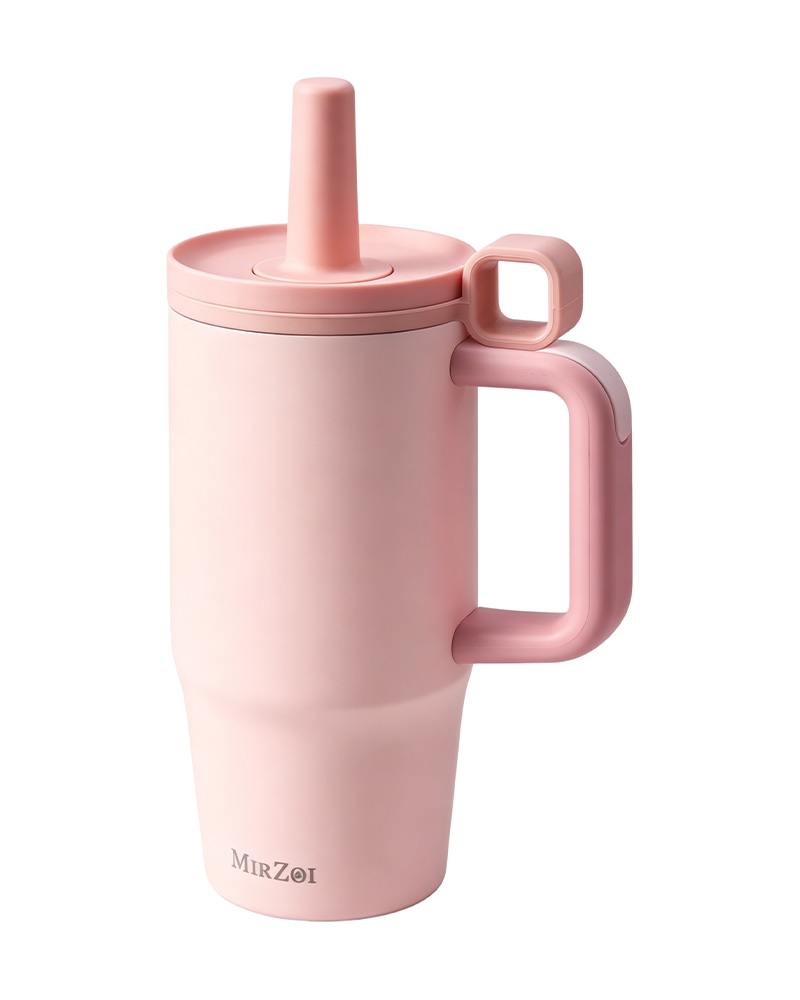
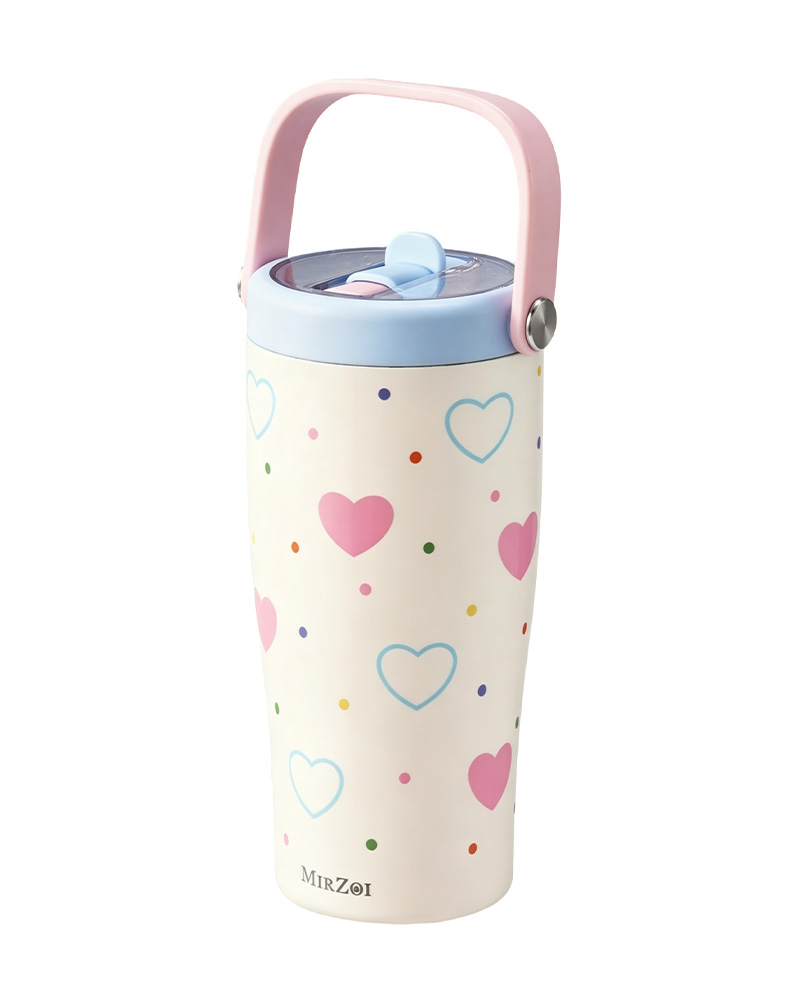
A travel mug can have a narrow base and still fit awkwardly in a vehicle. The cup holder may taper, contain flexible retaining tabs or sit close to a console wall. A large handle can interfere before the base reaches its intended position. For drinkware importers and private label buyers, car mug cup holder fit needs more than one outside diameter.
The aim is to document the geometry and check the intended configurations. A useful buying record separates the section that enters the holder, the mug's supported position and the surrounding handle clearance. This produces clearer product information than a broad statement that the mug fits every car.
Measure the section that enters the holder
When comparing stainless steel car mugs, identify the lower body dimensions separately from the widest body diameter. Record how the profile changes with height. A single base measurement can miss a shoulder that stops insertion partway down.
Use the actual finished sample, including any base pad or accessory supplied with it. The travel mug base diameter on a drawing should have defined reference points, so the buyer and manufacturer measure the same feature. Keep the dimensioned profile with the sample record.
For an illustrative comparison, two mugs may both have a 70 millimetre base but reach different diameters farther up the body. Those figures describe a hypothetical example, not Mizhou specifications. The lesson is that matching the bottom dimension alone does not establish the insertion depth.
Record the holder as a three dimensional space
Measure the holder opening, the relevant lower section and the available depth where a dimensional survey is appropriate. Note retaining tabs, removable inserts and other features that influence the space. Do not describe the holder as one perfect cylinder unless that matches the actual geometry.
Photographs can help explain an obstruction, but a top view may conceal a narrower section beneath the rim. Use a reference scale and record where each measurement was taken. A sketch of the section is often more informative than several unlabelled photographs.
Keep the vehicle model, year and console configuration with the observations. Similar vehicle names do not establish identical interiors. A finding for one surveyed holder should not automatically extend to other positions or trims that have not been checked.
Check the supported position rather than insertion alone
A mug that enters the holder has passed only one part of the review. Observe how deeply it seats, which surfaces support it and whether it rests in the position intended by the design. A narrow base balanced near the opening may behave differently from a mug supported farther down.
Review the sample empty and with the representative contents defined for the evaluation, following the product's permitted use. Record the configuration and observations rather than assigning a universal stability claim from a brief hand check.
Treat this as a static compatibility review in a parked vehicle. It is not evidence of crash performance, retention during emergency manoeuvres or any vehicle safety approval. Those claims would need their own appropriate assessment and should not be implied in drinkware marketing.
Review car mug handle clearance
The handle can contact a console side wall or neighbouring object while the base still has room to move downward. Record its lowest point, projection from the body and orientation relative to the mug. The overall width including the handle belongs on the product sheet.
Test the intended placement with adjacent holder positions considered. Two individually compatible mugs may interfere when used side by side. A nearby compartment lid or movable console feature can also create a different clearance condition.
Do not encourage positioning that obstructs vehicle controls or interferes with the driver's space. Use the vehicle's instructions and the user's normal parked setup as the context for the review. Mug compatibility is not a reason to modify the console or remove required vehicle components.
Include the lid and removal movement
The fitted lid, straw or other supplied drinking feature contributes to the complete envelope. Measure total height in the sold configuration and inspect nearby structures that may affect placement or removal. A body only sample cannot establish compatibility for a taller finished set.
Observe the upward movement needed to remove the mug while the vehicle is parked. The handle may require clearance that is not obvious when the mug is seated. A product that fits at rest can still be inconvenient if its normal removal path contacts another feature.
Keep spill resistance and cup holder fit as separate questions. A geometrically compatible mug is not automatically leakproof, and a sealed lid does not make the base suitable for every holder. Product wording should reflect the evidence for each claim independently.
Keep listing dimensions aligned with production
Approve the base profile, handle and accessory configuration together with the final sample. A revised pad, larger handle or altered body shoulder can affect fit even when the nominal capacity stays unchanged. Review those changes before retaining an earlier compatibility statement.
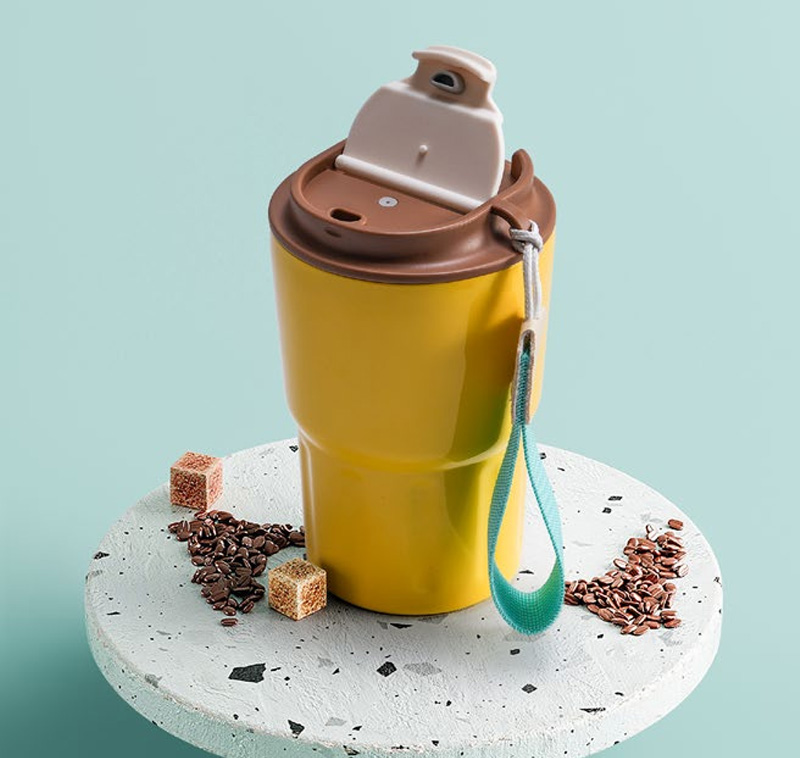
Product photographs should show the taper and handle clearly. A front view hiding the base under a decorative surface removes information that customers need. Add a dimension drawing that distinguishes the lower body, maximum width and overall height.
For the next sourcing enquiry, send the target holder observations alongside the preferred capacity and appearance. That gives the manufacturer a specific interface to discuss and gives the retailer a more accurate listing: useful dimensions, a defined configuration and compatibility language limited to what was actually checked.

 English
 Español