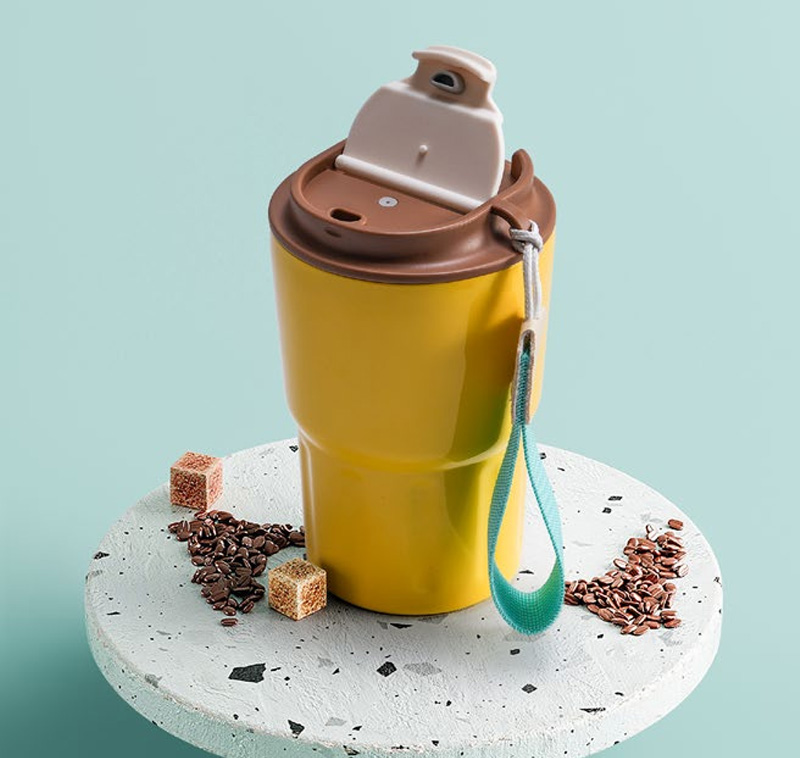
A travel mug marked with one capacity can hold a different practical amount once the lid is fitted and space is left for normal use. That difference can confuse buyers when quotations, packaging and product pages use the same number without explaining its basis. The issue is the meaning of the figure, not simply whether the vessel can hold liquid.
For private-label and wholesale orders, agree which volume is being specified and how it will be measured. Keep the nominal product description, any brimful measurement and the recommended filling guidance distinct. A clear capacity record helps the supplier and buyer use consistent language across the order and customer materials.

Start with the ordered mug and lid
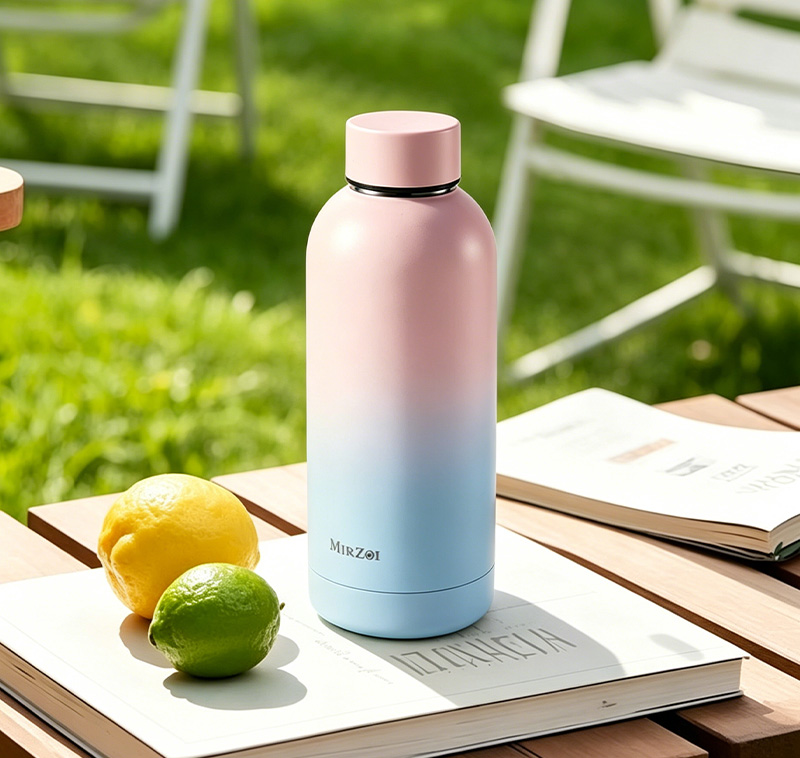
The gradient sliding-lid car mug is the relevant product reference. Identify the exact mug body and lid combination being ordered. A lid change can alter the space available beneath it, even if the outside appearance and body dimensions remain similar. The measurement basis should belong to the supplied combination.
Ask what the published capacity represents. It may be a nominal designation or a measurement made under stated conditions. Do not assume that a catalogue number tells the user where to fill a hot drink. The supplier should clarify the intended interpretation and the applicable filling instructions.
Record the drawing or model reference alongside the answer. When several mug designs share a product family name, a general statement about that family may not describe every shape. The actual body geometry and lid arrangement matter more than the broad category label.
Distinguish volume from usable filling guidance
A brimful measurement describes liquid reaching a defined upper reference. A practical filling instruction may require space below the lid or other features. These can be different values for legitimate design reasons, but they need clear names rather than an unexplained pair of numbers.
The lid may extend into the opening or include features that occupy space. The user's handling and drinking arrangement also matter to the manufacturer's guidance. Buyers should request the recommended filling instruction for the model instead of deciding that any volume below the rim is acceptable.
| Capacity term |
What needs definition |
Where the wording belongs |
| Nominal capacity |
Meaning of the product designation |
Quotation and specification |
| Measured volume |
Reference level and measurement conditions |
Sample review record |
| Practical fill guidance |
Manufacturer's intended filling instruction |
User information |
| Lid clearance |
Relevant space for the supplied closure |
Design and instruction review |
| Unit conversion |
Agreed unit and rounding approach |
Packaging and retail listing |
Agree a comparable measurement method
If capacity is an acceptance point, agree the method before reviewing samples. Define the reference level, whether the lid is present, the measurement equipment and the relevant conditions. A casual kitchen demonstration is difficult to compare with a supplier's controlled measurement if neither party records what was done.
If a gravimetric method is used, the procedure needs the appropriate treatment of liquid density and conditions. Do not equate every liquid's mass with its volume. The review team should use an agreed method and suitable equipment rather than relying on an unexplained reading from a household scale.
Sampling and tolerances also need agreement where they form part of acceptance. A single sample can support a design discussion but does not establish variation across the entire order. Keep the observed sample result separate from a general claim about all production units.
Avoid turning capacity into another performance claim
Volume does not establish insulation time, leak resistance or suitability for carrying inside a bag. A sliding closure may be described as splash-resistant without being verified for every orientation or transport condition. Use the supplier's supported description for the exact lid and avoid extending it through implication.
Likewise, a larger nominal figure does not automatically make a mug more suitable for a particular vehicle. External geometry and handle clearance need their own fit review. Capacity is one purchasing field within the complete product specification, rather than a substitute for checking the intended use.
- Name the body and lid versions in the sample record.
- Ask what the catalogue capacity actually describes.
- Agree the reference level and measurement method.
- Keep filling guidance separate from a brimful number.
- Review unit conversions across all customer-facing materials.
Where both millilitres and fluid ounces are shown, identify the intended unit system and rounding. Similar unit names can be used differently in different markets. A consistent conversion rule is more reliable than copying whichever number appears in an old artwork file.
Keep packaging, listings and instructions aligned
Once the capacity wording is accepted, compare it across the quotation, retail page, carton artwork and instruction sheet. One team may use a nominal designation while another writes holds exactly, creating a stronger claim than the specification supports. Resolve those differences before the files are released.
If a design revision changes the inner shape or lid, review whether the accepted capacity information remains applicable. Keep a change record even when the marketing name stays the same. Reusing an old capacity label without checking the revised assembly can create an avoidable mismatch.
For a wholesale mug programme, the most useful capacity statement is one whose basis is understood by both supplier and buyer. It tells the purchasing team what is being ordered and gives the retail team accurate wording for the customer, while leaving filling and handling guidance tied to the actual product instructions.
Before approving artwork, read the capacity statement together with adjacent claims and illustrations. A fill graphic can imply a usable level even where the written number is labelled nominal. Make the visual and verbal messages agree so that a technically qualified statement is not undermined by a misleading image beside it.

 English
 Español