A drink bottle may look simple from the outside, but several parts work together once a drink is poured inside. The material touching the liquid, the walls surrounding it, the space between those walls, and the lid all have different jobs. Cleaning habits matter too, especially when the same bottle is used for coffee, tea, or flavored drinks rather than water alone.
For an insulated container, the wall construction deserves particular attention. A single layer of metal behaves differently from a bottle made with separated inner and outer walls. The space between the walls changes how heat moves, while the lid creates another point where the inside of the container meets the surrounding air.
The choice of stainless steel is also closely connected with everyday handling. A bottle may be filled, emptied, washed, carried, and opened many times. Its inner surface needs to remain practical for these repeated tasks, while the outer construction needs to retain its intended form.
Looking at these details together gives a clearer picture of how a 304 Stainless Steel Insulated Bottle works in ordinary use. The focus is not only on keeping a drink warm or cold. Ease of cleaning, sealing, drink compatibility, and the condition of the bottle over time all have a place in the overall picture.
Why Is 304 Stainless Steel Used For Insulated Bottles
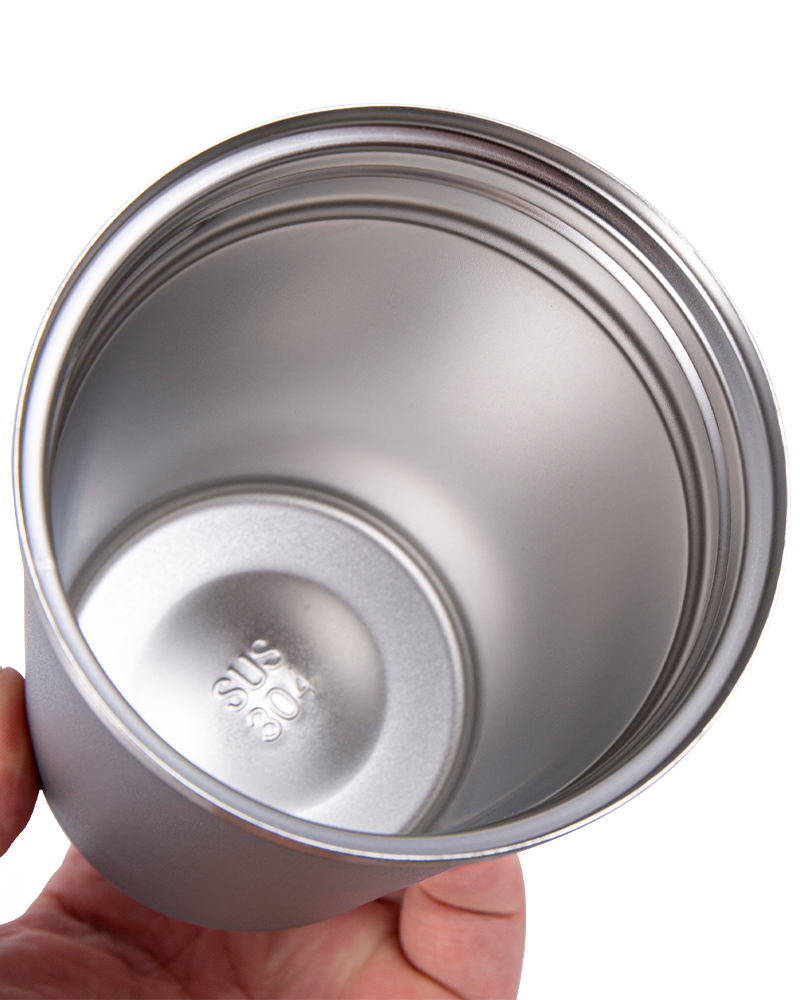
The inside of a drink bottle is in direct contact with what people consume, so material choice naturally receives attention. Stainless steel provides a solid surface that can be washed repeatedly and used with different types of drinks. It can also be formed into the shapes required for an insulated bottle.
There is another practical consideration. The inner wall has to remain reasonably easy to clean. Coffee residue, tea traces, or flavored drinks can leave something behind after the liquid has been poured out. A surface that can be rinsed and cleaned without much difficulty makes routine use less troublesome.
The outer wall has a different role. It is handled throughout the day and is exposed to knocks, contact with other objects, and changes in the surrounding environment. The material therefore has to work as part of the complete bottle rather than simply provide an attractive finish.
Manufacturing also influences how the material is used. The steel needs to be shaped into the inner and outer sections and joined in a way that supports the intended construction. The result is a container where material and structure are closely related.
For everyday users, several details are worth checking:
- The condition of the inner surface
- How easily the opening can be reached during cleaning
- Whether the lid can be cleaned properly
- Whether the bottle feels practical to carry and handle
These details tend to become more noticeable after repeated use than they are when a bottle is new.

How Does The Double-Wall Structure Support Insulation
An insulated bottle does not rely on a single sheet of metal between the drink and the outside world. The body normally has an inner wall and an outer wall, with a separated space between them.
That arrangement changes the path heat has to travel. With a single-wall container, the liquid is much closer to the outside surface. A double-wall construction creates another layer and a gap between the two surfaces.
The difference can be felt during normal use. A container filled with a hot drink does not simply become as hot on the outside as the liquid inside. The wall arrangement creates a barrier between the contents and the hand holding the bottle.
The same idea applies when the drink is cold. Heat from the surrounding environment has to pass through the bottle construction before it reaches the liquid. Insulation slows that exchange rather than making the contents completely unaffected by the surrounding temperature.
The shape of the bottle also has a practical role. The body, shoulder, base, and opening have to fit together as one piece. A bottle that looks simple on a shelf may involve several forming and joining steps before it reaches that shape.
This is why the wall construction should be considered separately from the steel itself. The material provides the surface and physical body, while the separated wall arrangement creates the basis for insulation.
How Does Vacuum Insulation Reduce Heat Transfer
The space between the two walls is particularly important in an insulated design. Removing much of the air from that space reduces the amount of material available for certain forms of heat movement.
Heat still moves. A hot drink will gradually cool, and a cold drink will eventually become warmer. The purpose of insulation is to slow that process.
For a hot drink, heat naturally moves toward the cooler surroundings. For a cold drink, the direction is reversed, with heat from outside moving toward the cooler liquid. The insulated wall arrangement makes either process slower.
This is also why the performance of an insulated container cannot be attributed to stainless steel alone. A metal wall provides the physical structure, but the space separating the walls changes how heat travels through the body.
The condition of that space matters as well. If the bottle suffers a serious impact and the wall construction is affected, the insulation may not behave in the same way afterward. A dent can sometimes be more than a surface issue when it reaches the part of the bottle responsible for separation between the walls.
Opening the bottle introduces another route for heat exchange. Once the lid is removed, the drink is directly exposed to the surrounding air. Frequent opening is consequently different from simply carrying the bottle while it remains closed.
Why Does The Bottle Lid Affect Temperature Retention
The lid is easy to overlook because attention naturally goes to the bottle body. In practice, it has a different set of responsibilities. It closes the opening, helps prevent spills, and limits unnecessary contact between the inside of the container and the surrounding air.
A lid that does not sit correctly can create a noticeable difference. Air can move more freely through the opening, and liquid may escape when the bottle is tilted. A sealing ring is commonly used around this area to create a closer connection between the lid and the bottle.
That small part deserves regular attention. A sealing ring can collect residue, become displaced during cleaning, or deteriorate through repeated handling. Even when the bottle body remains in good condition, a problem around the lid can affect everyday use.
The underside of the lid can also hold traces of coffee, tea, or other drinks. It is often less visible than the main inner wall, so it may receive less attention during a quick rinse.
A simple cleaning routine should include the lid rather than treating it as an accessory:
- Rinse the lid after use.
- Clean around the sealing area.
- Remove washable sealing parts when the design allows it.
- Let the components dry before closing the bottle.
The lid is a small part of the overall construction, but it connects the insulated interior with the outside environment. Its fit and condition therefore matter.
Can A 304 Stainless Steel Insulated Bottle Hold Different Drinks
Water is usually the easiest drink to manage, but everyday use is rarely limited to water. Coffee, tea, juice, flavored drinks, and milk-based beverages each bring their own cleaning considerations.
Coffee can leave a noticeable smell after the liquid is gone. Tea may leave traces around the inner wall or opening. Juice can leave sticky residue, particularly around the lid and mouth of the container. Milk-based drinks require prompt cleaning because residue can remain in areas that are difficult to see.
Carbonated drinks are another case worth considering. A sealed bottle containing a carbonated beverage is subject to pressure from the drink itself, so the bottle and lid need to be suitable for that type of use. The manufacturer's stated usage guidance should be followed for drinks that behave differently from still water.
The point is not that one bottle automatically suits every drink in the same way. The more useful question is whether the construction and cleaning routine match what will actually be stored inside.
| Drink |
Practical point to consider |
| Water |
Simple routine cleaning |
| Coffee |
Aroma and residue |
| Tea |
Residue and lingering smell |
| Juice |
Sticky traces around the opening |
| Milk-based drinks |
Prompt cleaning |
| Carbonated drinks |
Pressure and lid suitability |
For people who alternate between several beverages, access to the inside of the bottle becomes especially useful. A bottle that is easy to rinse and clean is less troublesome when switching from one drink to another.
Why Can Coffee And Tea Leave Odors In Stainless Steel Bottles
A bottle can look clean and still retain the smell of a drink. Coffee and tea are familiar examples. Their aromas can remain around the inner wall, lid, and sealing parts after the liquid has been emptied.
The lid is often where this becomes noticeable. Small recesses and removable pieces can collect traces that are missed during a quick wash. If the bottle is closed while still damp, the remaining moisture has little opportunity to escape.
A better cleaning routine does not necessarily mean scrubbing every part for a long time. Reaching the areas that actually contact the drink is more useful. The inner wall, mouth, underside of the lid, and sealing ring should all receive attention when the bottle is used regularly for strongly scented drinks.
Drying is another simple consideration. Leaving the bottle open after washing allows moisture to escape. The lid can be left separate from the body when its construction permits this.
If an odor remains, it is worth checking the lid and sealing parts rather than assuming the smell comes from the stainless steel itself. Residue can collect in places that are easy to miss.
This distinction is useful in everyday maintenance. A persistent smell does not necessarily mean the bottle body has changed. Sometimes the source is a small component that has simply not been cleaned thoroughly.
What Can Cause A 304 Stainless Steel Insulated Bottle To Lose Its Performance
An insulated bottle can change over time, particularly when it is dropped or struck against a hard surface. Not every dent affects insulation, but a significant change in the wall construction deserves attention if the bottle no longer behaves as it did previously.
The insulated space is part of the bottle's construction. If the separation between the walls is compromised, heat may move through the body differently. A change in temperature retention can therefore be one sign that the bottle has suffered more than a cosmetic mark.
The lid should be checked as well. A bottle that leaks or loses its seal may appear to have an insulation problem when the actual issue is around the opening. Dirt under the sealing ring, a misplaced ring, or a damaged component can all change how the lid fits.
Some common signs are easier to interpret when considered together:
- The outer surface changes noticeably during normal use.
- The lid no longer fits as securely.
- Liquid escapes around the opening.
- A dent appears near an important part of the wall.
- The bottle retains an odor despite ordinary cleaning.
- Moisture repeatedly remains around the lid.
There is no need to treat every small mark as a serious fault. The useful approach is to look at what actually changed. If the bottle still seals properly and the wall remains intact, a surface mark may have little effect. If several functions change at the same time, the condition of the bottle deserves closer attention.
What Should You Check When Choosing A 304 Stainless Steel Insulated Bottle
Material is only one part of the decision. The bottle also needs to fit the way it will be used. Someone carrying water to work may have different priorities from someone who regularly takes coffee or tea on the move.
The opening is worth checking. A narrow mouth can make drinking convenient, while a wider opening may provide easier access for cleaning. Neither design is automatically suitable for every user. The better choice depends on what goes into the bottle and how it is normally washed.
The lid deserves similar attention. Check how it attaches to the bottle, how the sealing area is cleaned, and whether removable parts can be handled without difficulty. A complicated lid can create more places for residue to collect.
The shape and handling also matter. A bottle that is comfortable to hold is easier to use throughout the day. The base should sit securely on the surfaces where it will normally be placed, while the overall form should suit the way it is carried.
Before choosing a bottle, it can help to consider the following:
- What drinks will normally be stored?
- How easy is the inner wall to reach?
- Can the lid and sealing area be cleaned?
- Does the opening suit the intended use?
- Is the construction appropriate for regular handling?
- Can the bottle be dried properly after washing?
A 304 Stainless Steel Insulated Bottle is therefore better viewed as a combination of material, wall construction, insulation, lid design, and maintenance requirements. Each part has a different function, and the way those parts interact determines how practical the bottle is in everyday use.
The choice becomes clearer when the intended routine is considered before the bottle itself. A design that is easy to clean, closes securely, and matches the drinks being carried is generally easier to maintain over continued use.

 English
 Español