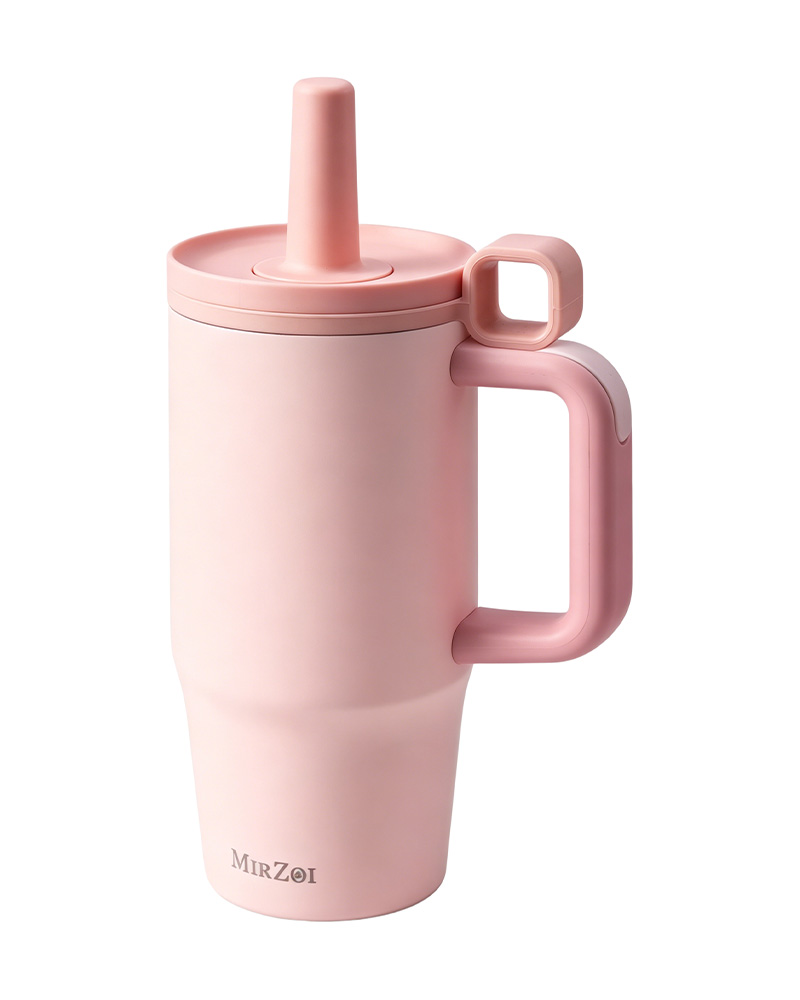
A travel mug used during a normal day has to fit into several small routines. It may be placed on a desk, carried in a bag, used during a commute, opened between tasks, and cleaned before the next use. These simple actions influence how the mug body, lid, drinking opening, sealing parts, and insulation are designed.
An Insulated Leak-Proof Travel Mug therefore involves more than keeping a drink contained. Its design has to bring several functions together without making everyday handling unnecessarily complicated. The lid needs to close properly, the drinking opening needs to remain practical, and the body needs to support the intended temperature-retaining function.
Manufacturing also becomes part of this process. A design that looks straightforward on paper still depends on accurate component fitting and consistent assembly. Looking at these factors together provides a clearer view of how travel mug design responds to ordinary use.
How Do Everyday Carry Requirements Influence Travel Mug Design
Daily carrying is one of the basic conditions that shapes a travel mug before individual components are considered. Unlike a cup that remains in one place, a travel mug is expected to move between different environments. It may be carried by hand, placed beside a computer, stored in a vehicle holder, or packed into a bag.
These situations create different design considerations. The body needs to be comfortable to handle, while the lid needs to remain secure during movement. The overall shape also needs to work with the way people normally grip and place the mug.
Convenience does not come from one feature alone. It comes from how several parts work together.
- The body should provide a practical area for holding.
- The lid should be easy to open and close during routine use.
- The drinking opening should be positioned for controlled drinking.
- The base should provide a stable contact area when the mug is placed down.
- The overall structure should remain easy to handle during carrying.
The relationship between these elements is important. A change to one area can affect another. For example, a different lid arrangement may change how the mug is opened, cleaned, or carried.
| Daily situation |
Design consideration |
| Carrying by hand |
Comfortable shape and practical grip |
| Placing on a desk |
Stable contact with the surface |
| Carrying in a bag |
Secure lid and sealing arrangement |
| Drinking while moving |
Accessible drinking opening |
| Repeated daily use |
Straightforward handling and cleaning |
This makes everyday use a starting point for the rest of the design process rather than a feature added at the end.

How Does the Lid Design Support Everyday Leak Protection
The lid is closely connected with how a travel mug handles liquid during movement. Its role is not limited to covering the opening. It also creates the connection between the mug body and the drinking area.
A practical lid needs to balance several actions. It should close securely, allow the user to access the drink when needed, and return to a closed position without requiring complicated handling. The way these movements are arranged influences the overall sealing design.
The contact between the lid and the mug body is also important. When the parts meet as intended, the sealing area can remain properly positioned. If the lid includes an opening mechanism, that area has to work with the rest of the closure rather than being treated as a separate feature.
For an Insulated Leak-Proof Travel Mug, the lid also connects two different user expectations: containing the drink during transport and providing convenient access while drinking. Good design therefore considers the closed state and the drinking state together.
The lid may include several connected areas, but the goal remains straightforward: provide a controlled path for opening and closing while keeping the liquid contained during ordinary carrying.
Why Is Gasket Placement Important in Travel Mug Design
The gasket is a small component, but its position can influence how the sealing area works. It sits between surfaces that need to meet closely, so its placement has to correspond with the surrounding lid structure.
Position matters because a sealing component needs to remain in the intended area while the lid is opened, closed, cleaned, and used repeatedly. Its shape and location are considered together with the groove or contact area where it sits.
This is also why assembly is closely connected with design. A gasket may be designed correctly, but it still needs to be placed correctly during production. The relationship between the gasket, lid, and mug body needs to remain consistent.
Rather than treating the gasket as an isolated part, designers generally need to consider:
- Where the gasket sits within the lid.
- How it contacts the mating surface.
- How it remains in position during opening and closing.
- How the component can be removed and cleaned.
- How the surrounding parts support its intended position.
For an Insulated Leak-Proof Travel Mug, this small area demonstrates a broader principle of product design: a component does not work independently. Its function depends on how it interacts with neighboring parts.
How Does the Drinking Opening Influence Travel Mug Design
The drinking opening is where the user directly interacts with the drink, so its design has a different purpose from the main lid seal. It needs to provide access to the beverage while fitting into the overall closure arrangement.
Its location can influence how the mug is tilted during drinking. Its opening and closing movement can also affect how easily the mug can be used between other activities.
A drinking opening that is easy to access may require additional attention around the surrounding lid area. The design has to account for the transition between an open drinking position and a closed carrying position.
This creates a balance between accessibility and containment. The opening should serve its intended purpose without making the rest of the lid unnecessarily difficult to operate.
Another consideration is cleaning. Small areas around the drinking opening may come into regular contact with beverages. A practical design therefore considers how these areas can be reached during routine washing.
The drinking opening is consequently not just a hole in the lid. It forms part of the wider relationship between drinking, closing, carrying, and cleaning.
How Is Vacuum Insulation Integrated Into a Travel Mug
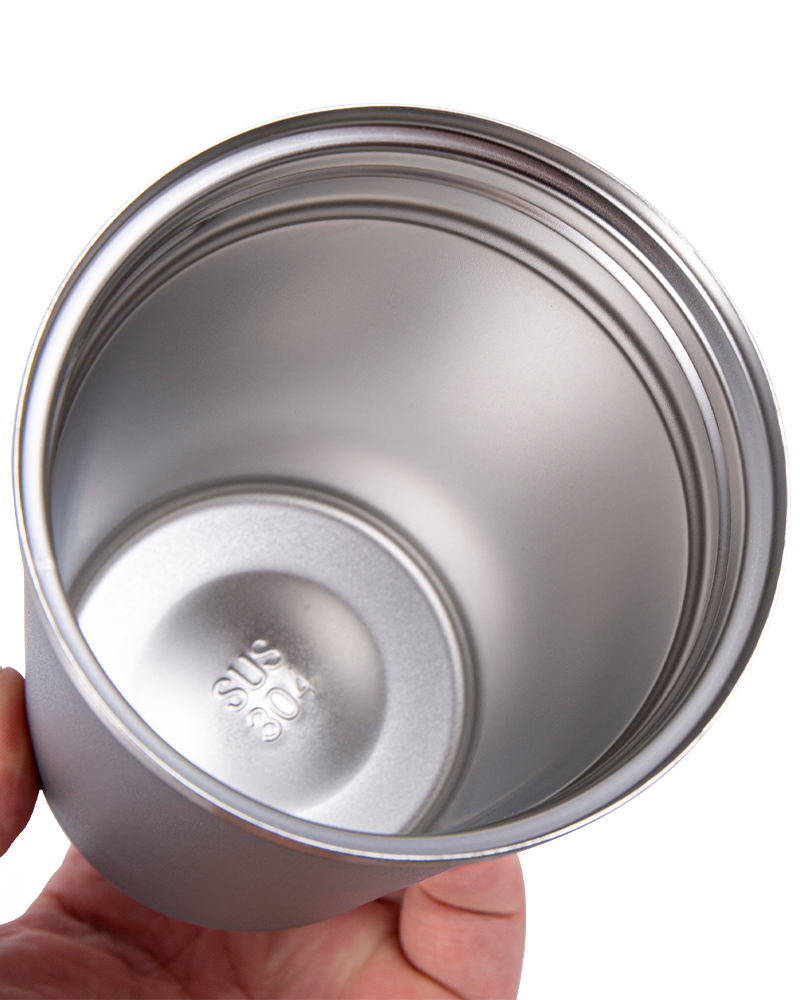
Insulation is another major part of the overall design. The mug body needs to accommodate the insulating structure while retaining a form that can be handled and transported during daily activities.
The insulation arrangement sits within the body rather than functioning as a separate accessory. This means the wall structure, inner container, outer surface, and other surrounding parts need to work together.
For an Insulated Leak-Proof Travel Mug, insulation and sealing address different functions, but they meet at the overall product structure. The body is responsible for supporting temperature retention, while the lid and sealing areas control access to the drink.
The relationship can be viewed simply:
| Design area |
Main consideration |
| Mug body |
Supports the drink and insulation structure |
| Insulating section |
Helps reduce heat exchange |
| Lid |
Covers the opening and supports containment |
| Sealing area |
Helps maintain closure around the opening |
| Drinking opening |
Provides controlled access to the beverage |
This separation of functions helps explain why travel mug design involves several connected decisions. The insulation does not replace the lid, and the lid does not replace the body structure. Each part contributes to the way the finished product is used.
What Makes a Travel Mug Easier to Clean After Daily Use
Cleaning is easy to overlook when focusing on carrying and insulation, yet it has a direct connection with everyday convenience. A travel mug may come into contact with coffee, tea, water, or other beverages, and different areas of the lid can be exposed during normal use.
The lid deserves particular attention because it can contain several connected surfaces. If a component can be removed without difficulty, cleaning may become more straightforward. At the same time, the parts need to be returned to their intended positions after washing.
This creates a design balance. More components can provide different functions, but each additional connection may also require consideration during cleaning and assembly.
A practical cleaning-oriented design may consider:
- Whether commonly contacted areas are accessible.
- Whether removable parts can be handled easily.
- Whether sealing components can be repositioned correctly.
- Whether moisture can be removed after washing.
- Whether the lid can be reassembled without unnecessary steps.
For an Insulated Leak-Proof Travel Mug, cleaning considerations are therefore connected with both usability and component arrangement. The goal is not simply to make every part removable, but to make routine care compatible with the way the product is designed.
How Are Travel Mug Sealing and Insulation Tested During Production
Once the design has been established, production checks help verify that assembled products correspond with the intended structure. Sealing and insulation involve different aspects, so they can be considered separately during inspection.
Sealing checks focus on the relationship between the lid, gasket, drinking opening, and mug body. The purpose is to assess whether the assembled closure behaves as intended during ordinary handling.
Insulation checks concern the mug body and its internal arrangement. These checks help confirm that the completed structure corresponds with the intended insulating design.
The production process may therefore involve several inspection points rather than relying on a single final check. Component condition, assembly position, lid closure, and finished-product performance can all form part of quality control.
The key point is consistency between design and production. A carefully planned structure still depends on correct assembly. Testing provides a way to check that relationship before the finished mug enters normal use.
Which Manufacturing Factors Shape Consistent Travel Mug Quality
Manufacturing brings the separate design considerations together. The mug body, lid, gasket, drinking opening, and insulation structure all have to become one functioning product.
Component fitting is particularly important. Parts need to meet their intended surfaces and remain in their planned positions during assembly. The same principle applies to the sealing area, where the relationship between several parts influences the finished closure.
Assembly sequence can also matter. If one component is positioned before another, the order of those operations may influence how the parts fit together. Clear production procedures help keep the intended arrangement consistent.
Material handling, component inspection, assembly, and finished-product checks all form part of this process. None of these areas exists completely on its own. They support the transition from a design concept to a product that can be used in ordinary daily routines.
For an Insulated Leak-Proof Travel Mug, this connection between design and manufacturing is particularly relevant because several functions share the same physical structure. The lid has to support access and containment. The body has to accommodate insulation and handling. The sealing components have to remain correctly positioned. Cleaning considerations also need to fit into the same arrangement.
As daily habits continue to shape drinkware design, these connected considerations remain relevant to how travel mugs are developed and manufactured. The result is not determined by a single component, but by how the body, lid, sealing arrangement, drinking opening, insulation, cleaning requirements, and production process are considered as parts of one design.

 English
 Español